
By: Ron Nichols, Understanding Ag, LLC
Every day on his farm, Luke Bergler sees the connection between healthy soil, healthy grass, healthy animals and healthy people.
And he sees life—lots of life.
When he pushes a shovel into the soft, well-aggregated soil on his 240-acre farm near Ridgeway, Minnesota, Bergler sees more earthworms than he ever thought imaginable. The two ponds that were once filled with runoff water are now nearly dry, even though precipitation has been plentiful. Those near-empty ponds are an indication of well-functioning soil that soaks up precipitation at an incredible rate and provides production resiliency throughout the growing season.
Dragonflies, monarch butterflies, birds and whitetail deer abound in astounding numbers.
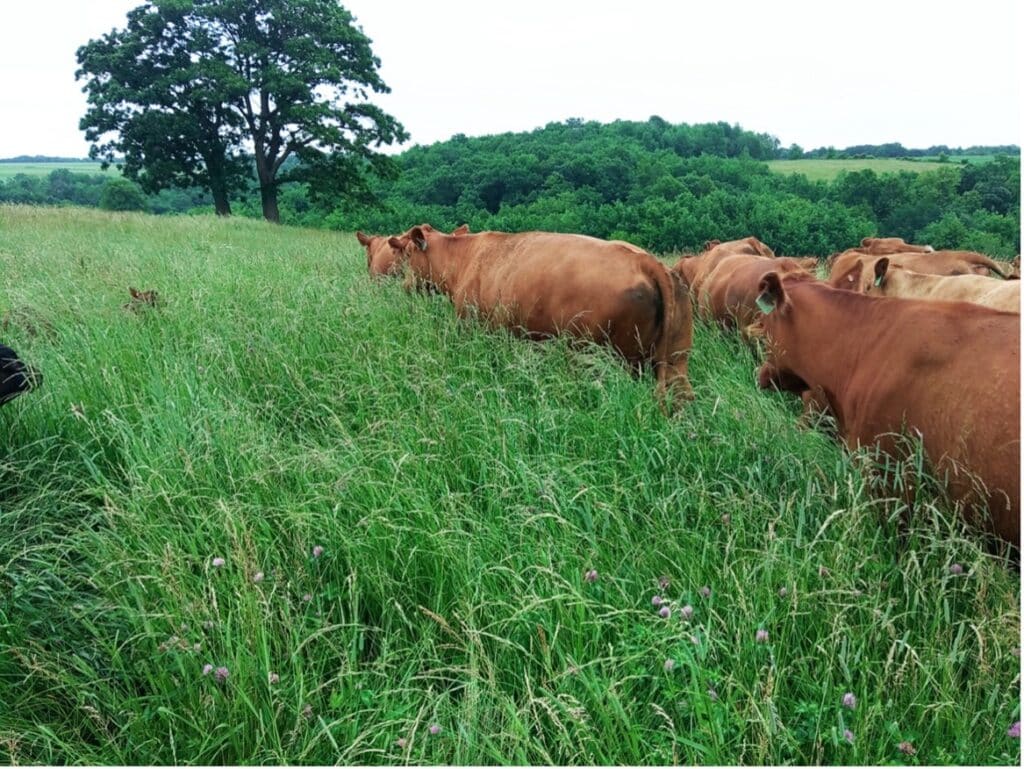
Thanks to his 24-48-hour paddock rotations, his 50-pair cow-calf herd grazes lush, diverse grasses, cover crops and innerseeded corn stubble, beginning in early May and into January. Getting the nutrition and “medicine” they need from healthy grass, Bergler no longer uses dewormer or the panoply of prophylactic vaccinations prescribed in conventional confined animal operations. The pregnancy rate of his herd is an astounding 99 percent.
“I’ve had one open cow in the last five years,” he says.
Never applying more than 100 pounds of nitrogen per acre to his corn acres, Bergler harvests 230 bushel-per-acre corn behind a seven-way grain mix with peas and flax.
“I’ll admit that I can’t do it across every acre,” he says, “but there’s enough signs of hope that it’s coming.”
Bergler recently no-tilled soybeans into cereal rye and aerially applied two bushels of oats,rye and radishes (via drone). Then he combined the beans (cutting off the top of the oats off), yielding more than 70 bushels of beans per acre. Then, after a 30-40-day rest period, he was able to graze his herd in the remaining oat/rye/radish cover crops.
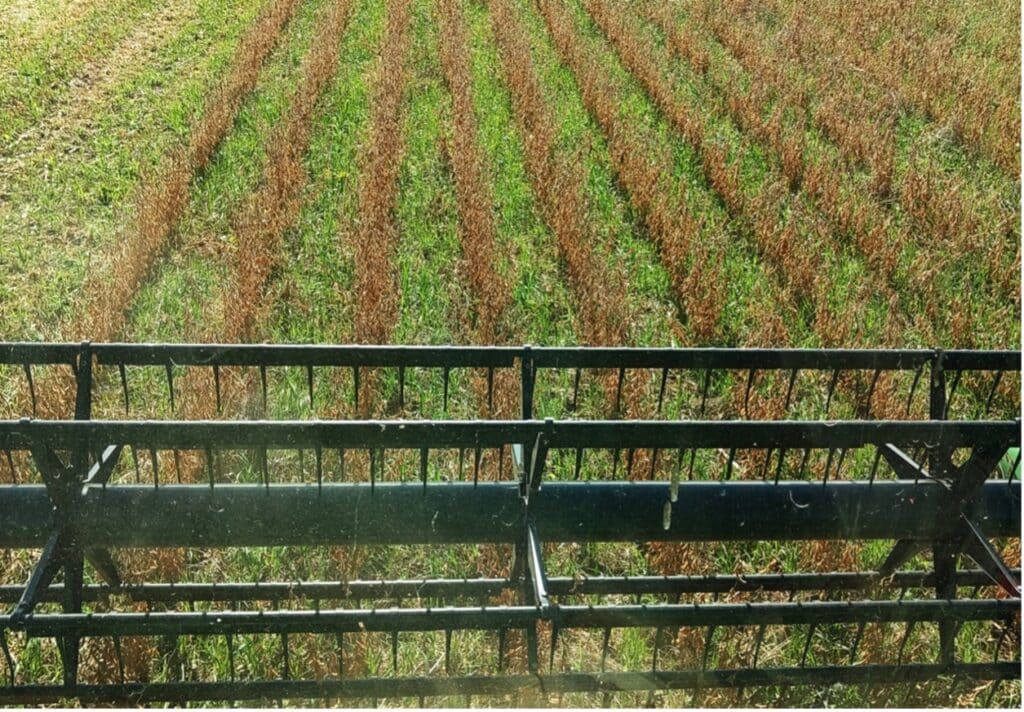
But of all of the regenerative farming benefits experienced since he began making the transition from conventional to regenerative agriculture seven years ago, there’s one benefit that’s especially meaningful to the 42-year-old Bergler.
“Now, I’m always home in my warm house sitting at the table for dinner every evening,” he says.
Before his regenerative transition, Bergler would come home from his work off the farm as a custom home builder and face the time-consuming chores associated with feeding cattle daily, spending hours baling hay, mixing feed, and hauling manure, all of which left little time for the “luxury” of family time.
“I used to feed 200 plus days a year,” he says. “Each day it would take about two hours of time. Now we feed less than 130-140 days a year and it only takes me 20-30 minutes. I used to haul 80-100 loads of manure each year and now I’m down to seven. All of those little things add up to an improved quality of life.”
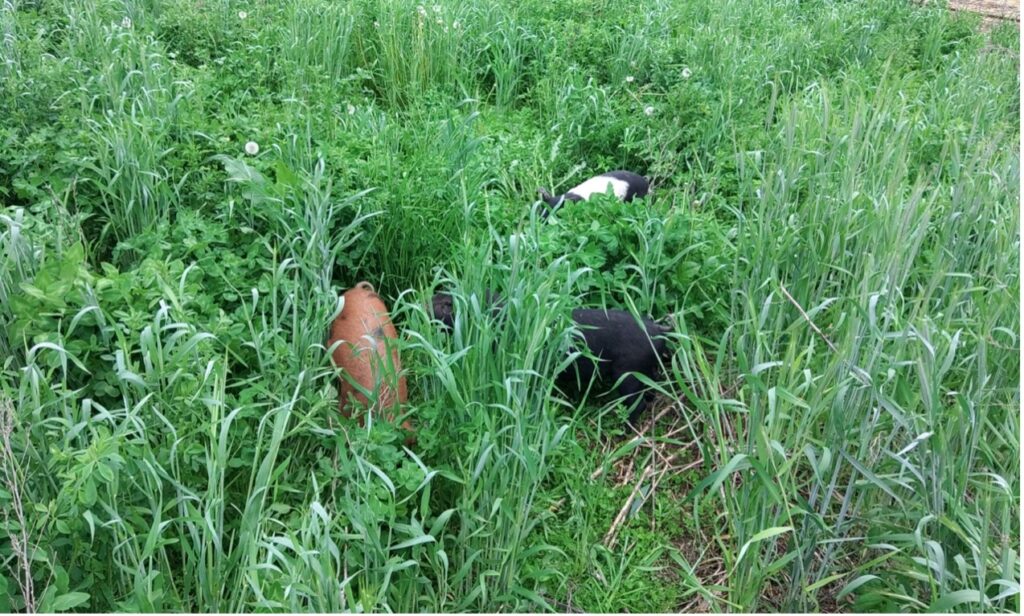
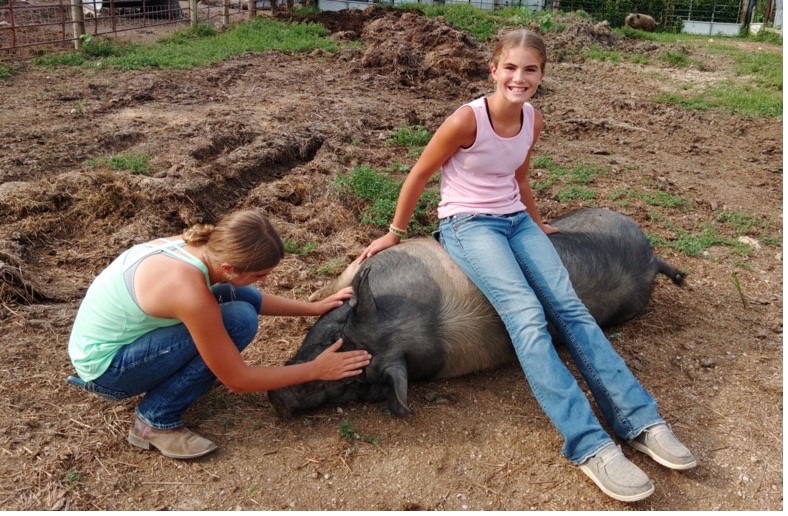
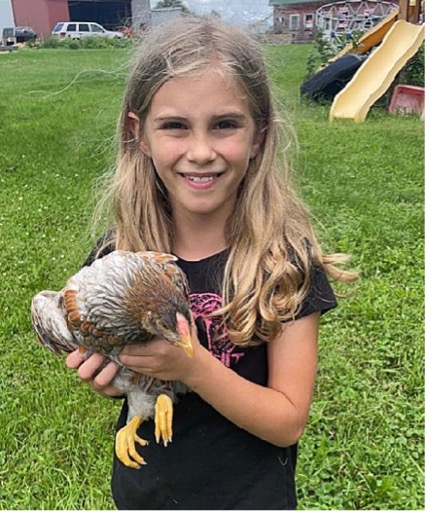
Today, his entire family is involved in the farming operation. Bergler’s wife, Holly, manages the farm’s non-confined, non-GMO-fed hog operation. His three daughters, 16-year-old Willa, 13-year-old Malia and nine-year-old Emery, manage 30-plus laying hens, collect and sell eggs to about 20 customers, a constituency consisting mainly their schoolteachers. The profits from the poultry operation, less the cost of feed, reside with the three sisters. Along with caring for and having the chore responsibilities of their horses which are often used to rotate the cow herd.
Bergler says the list of regenerative benefits grows by the day.
“It doesn’t mean we don’t have we have setbacks, challenges or financial issues,” he says. “After all, we are American farmers. But when you abide by the principles, believe in the system and pay attention, it’s remarkable what can happen. There are so many things working now that it just blows my mind.”
In addition to the changes on the farm, Bergler’s relationships with the conventional input suppliers and his neighbors have also changed.
“My neighbors will still call and ask if I’m spraying for this pest or that weed, and my response is ‘No’ because they’re simply not a problem,” he says. “They also wonder why I’m not harvesting my sorghum or hay mixes. My only response is why do all that when the cows can get it by themselves, and a lot cheaper than I can do it,” Bergler says.
“The guy who supplies my fuel asked what happened to me and my operation, all because I’m not ordering nearly as much fuel throughout the year. I even switched co-ops because the fertilizer dealer couldn’t comprehend what I was doing,” he says.
Bergler routinely swaths and combines a 23.3 percent crude protein multigrain and pea mix that that supplies most of his feed for the pigs and chickens. “I can’t buy that quality of feed, especially as cheap as I can grow it. And the cattle aren’t consuming nearly as much mineral supplement because they’re getting most of the nutrients they need from what they graze.”
Despite his success, Bergler says more than one person has told him, “You’ll go broke doing what you’re doing.”
“But we’re still here,” he says. “Granted, you have to be willing to expect some outcomes you were not expecting, but the cows are such a more useful tool than I would have ever imagined, and I’ve had cattle since I was 12.”
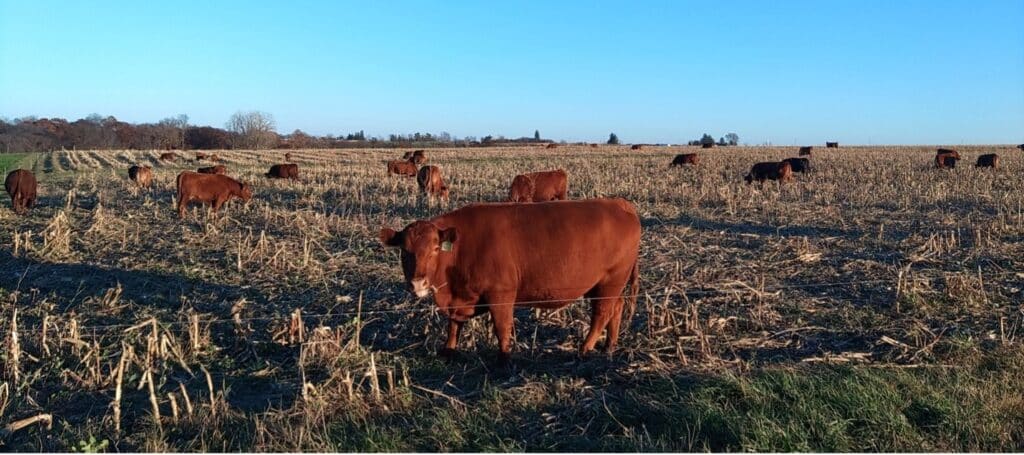
Like many of his contemporaries, when Bergler began his regenerative journey, he sought insight from Understanding Ag’s Gabe Brown and attended a Soil Health Academy.
“When I attended the SHA, the instructors talked a lot about how regenerative farming can improve one’s quality of life, but I’m not sure I understood what that meant at the time,” he says. “I wholeheartedly understand that now. Farming for me has become fun again. It’s not just a job.”
While he’s excited to share his experiences, Bergler says he doesn’t want to come across as “tooting my own horn.”
“I just enjoy having conversations about regenerative farming and sharing what’s worked for me,” he says. “And, who knows, there may just be one person out there who reads this and says, ‘If this guy can do it, maybe I should try something.’”